
The Arc of Literary Journalism in America
July 24, 2010 Magazine WorkGiven at the Mayborne Conference, July 24, 2010
<
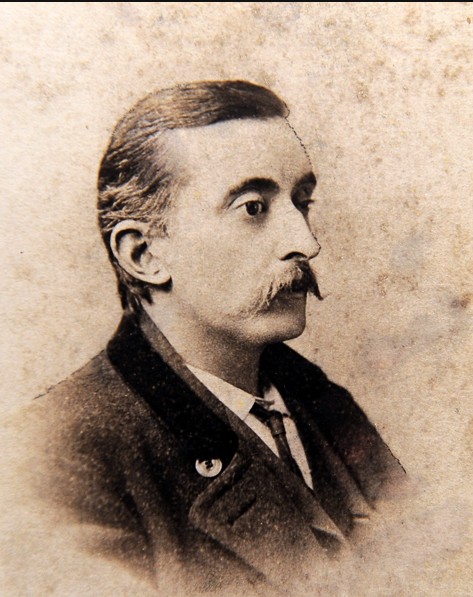 Lafcadio Hearn
Great editors are necessary for the creation of literary journalism. But they are not sufficient.
Anybody who has worked at a publication knows this. If literary journalism was about editors and not about writers, every evening that The New Yorker's David Remnick rides the elevator down from his office in the Conde Nast Building and exits onto 42nd street he could tackle the first well-read guy or gal he sees and transform them into David Grann.
But not even the great David Remnick can do that.
I speak from experience. The editing part, not the elevator and tackling part, which I've never tried. The very best literary journalism I've edited has contained so little of me that you would need a magnifying class to see it, tweezers to pick it up, and a micrometer to measure it.
The very worst work masquerading as literary journalism that I've edited has contained more of me that I'd care to admit.
So it should have come as no surprise that as I started tracing American literary journalism back to its roots and imagined its future for this talk, I found so few inspirational editors leading the way. Literary journalism in America has almost always been a writer-made thing, something new writers routinely reinvent without realizing that they're reinventing.
Now, any discussion of literary journalism requires some sort of definition of the term, a requirement that I'm inclined to resist. Like rock and roll, literary journalism was widely practiced and commanded a healthy audience long before we agreed on a name for it. Some of the attendees here worship the literary nonfiction that Ross and Shawn published in The New Yorker. Some of you swear by the new journalism, as Tom Wolfe called it in his famous 1973 collection, or the new new journalism, the term Robert S. Boynton favors in his book of interviews with the likes of Michael Lewis, Adrian Nicole LeBlanc, Ron Rosenbaum, Susan Orlean, and others. Another faction says its prayers by creative nonfiction, led by godfather Lee Gutkind, which shepherds memoirs as well as essays and journalism inside its definitional gates. And some are blasted to ecstasy by the lyric essay, John D'Agata's term for the more experimental non-fiction that reaches for poetic truth.
It can be a very sectarian, quarrelsome crowd. Here's a visualization of all of these schools getting together to talk about journalism: PP 1
These separate schools enjoy quarrelling. I, too, delight in a good rumble-my first grade report card noted my tendency to start fights on the playground and then bring them into the classroom-but I resist joining this literary free-for-all. When it comes to journalism, I'm an ocean that refuses no river. If a piece tells a compelling story in print, and it shoots for truth, I'm for it.
When scholars go looking for the roots of literary journalism, they usually name such Europeans as Daniel Dafoe, Jonathan Swift, Richard Burton, James Boswell, William Hazlitt, and W.T. Stead. Depending on who is doing the talking, literary journalism starts in the United States with Benjamin Franklin in the colonial era or in the 1850s, when James Gordon Bennett's New York Herald was running voluminous coverage from abroad and Benjamin Day's New York Sun was running hoaxes. PP 2 Here's a cartoon in Vanity Fair in 1860 mocking Bennett as a herald, dressed in news clips that read, "Latest from Europe row," "Horrid murder full account," and "List of killed and wounded." PP 3 Check out the details on his flag. They look like icons from a graphical user interface, don't they?
But by the mid 1870s, you can find many American journalists applying the technical resources of literary fiction to their journalism.
They used vivid language.
They relyied on dialogue to tells stories.
They captured dramatic scenes and shaped fully realized characters.
They did their best to limit their knitting to the facts, some more successfully than others.
They packaged their work into a conventional, chronological narrative with the sorts of beginnings, middles, and ends that one associates with simple fiction.
They wrote long. Exceedingly long.
They immersed themselves in their reporting.
They all had a voice.
And they taught their copy to breathe.
To give you the flavor of how ambitious newspaper journalism could be in those times, listen to an excerpt from a 5,300-word newspaper article from the Aug. 26, 1876, Cincinnati Commercial, by Lafcadio Hearn, PP 4 who I consider one of the founders of American literary journalism.
First, a little about Hearn. He was 27 when he wrote this article. He had no formal education outside of boarding school in England. He was one-eyed, and his good eye was none too good. Like Twain, he also an accomplished satirist, publishing nine issue of his own satirical review in Cincinnati.
Hearn's piece, titled "Gibbeted: Execution of a Youthful Murderer," reports the hanging of the 20-year-old James Murphy for the fatal stabbing of a man after a drunken argument outside a Cincinnati dance-hall. The piece includes Murphy's post-conviction confession and concludes with his hanging-or should I say his double hanging. I don't mind inserting that spoiler because Hearn's original contained the same spoiler. The dek to his piece reads, "A Broken Rope and a Double Hanging; Sickening Scene Behind the Scaffold-Screen."
I do love alliteration.
Published the day after the execution, Hearn's piece still reads as artfully considered as any long-form piece you might encounter today.
Here's the back story: The sheriff, serving as executioner, pulls the lever. The rope breaks and the hooded prisoner crashes to the ground beneath the gallows. Knocked unconscious, he slowly comes to. Here's how Hearn, who was an eyewitness, reported it:
A pitiful groan came from beneath the black cap. ...
"Why, I ain't dead-I ain't dead!"
"Are you hurt, my child?" inquired Father Murphy.
"No, father, I'm not dead; I'm not hurt. What are they going to do with me?"
No one had the heart to tell him, lying there blind and helpless and ignorant even of what had occurred. The reporter, who still kept his hand on the boy's wrist, suddenly felt the pulsation quicken horribly, the rapid beating of intense fear; the youth's whole body trembled violently.
"His pulse is one hundred and twenty," whispered a physician.
"What's the good of leaving me here in this misery?" cried the lad. "Take me out of this, I tell you."
In the meantime they had procured the other rope-a double thin rope with two nooses-and fastened it strongly over the crossbeam. The prisoner had fallen through the drop precisely at 1:44 1/2 P.M.; the second noose was ready within four minutes later. Then the deputies descended from the platform and lifted the prostrate body up.
"Don't carry me," groaned the poor fellow, "I can walk-let me walk."
But they carried him up again, Father Murphy supporting his head. The unfortunate wanted to see the light once more, to get one little glimpse at the sun, the narrow world within the corridor, and the faces before the scaffold. They took off his ghastly mask while the noose was being readjusted. His face was livid, his limbs shook with terror, and he suddenly seized Deputy Freeman by the coat, saying in a husky whisper, "What are you going to do with me?" They tried to unfasten his hand, but it was the clutch of death-fear. Then the little Irish priest whispered firmly in his ear, "Let go, my son; let go, like a man-be a man-die like a man." And he let go. But they had to support him at arm's length while the Sheriff pressed the trap-lever-six and one-half minutes after the first fall. It was humanely rapid work then.
The body fell heavily, with a jerk, turned about once, rocked backward and forward, and became almost still. From the corridor only the head was visible-turned from the audience. Father Murphy sprinkled holy water upon the victim. The jugular veins became enlarged, and the neck visibly swelled below the black cap. At this time the pulse was beating steadily at 100; the wrist felt hot and moist, and we noticed the hand below it tightly clutched a little brass crucifix, placed there by the priest at the last moment. Gradually the pulse became fainter. Five minutes later, Dr. Crum, the jail physician, holding the right wrist, announced it at eighty-four. In ten minutes from the moment of the drop it sunk to sixty. In sixteen minutes the heart only fluttered, and the pulse became imperceptible. In seventeen minutes Dr. Crum, after a stethoscopic examination, made the official announcement of death.
The body was at once cut down by Sheriff Patton, and deposited in the handsome coffin designed for it. Half an hour later we returned to the jail, and examined the dead face. It was perfectly still, as the face of a sleeper, calm and undisfigured. It was perhaps slightly swollen, but quite natural, and betrayed no evidence of pain. The rope had cut deeply into the flesh of the neck, and the very texture of the hemp was redly imprinted on the skin. A medical examination showed the neck to have been broken.
Spot the literary journalism markers in Hearn's piece: The journalist as part of the story? Check. Passages of dialogue used to tell the story? Check. Vivid language? Check. A reliance on storytelling to advance the news? Check. Dramatic scenes, traditional narrative structure, long-form? Check, check, check. And what was on Hearn's reading list at the time? Gustave Flaubert and Theophile Gautier, who he translated. Hearn would go on to master fiction. His best novel, Chita, is set in the aftermath of the 1856 New Orleans hurricane.
So take that, Truman Capote.
Later, Hearn formulated a writer's credo that sounds crazier than Hunter S. Thompson. He wrote, "I think a man must devote himself to one thing in order to succeed so I have pledged me to the worship of the Odd, the Queer, the Strange, the Exotic, the Monstrous." There's a Library of America anthology of Hearn, which I recommend.
As you crank through newspaper microfilms from the 1870s and 1880s at the Library of Congress, you'll find many other splendid specimens of literary journalism. These writers poured the foundations upon which we're still building.
One of the greats of the 1880s was Elizabeth Jane Cochran, who wrote under the byline of "Nellie Bly." PP 5 You probably know about Bly from Brooke Kroeger's fine biography. Bly excelled at telling the stories of ordinary people at the Pittsburgh Dispatch, where she broke news about the working conditions in factories. She also reported from Mexico. But at the age of 23, frustrated at being confined to the arts and theater ghetto by her editors, she quit the Pittsburgh paper in 1887, leaving her editors this note: "I am off for New York. Look out for me. -Bly."
In New York, Bly talked her way onto the staff at Joseph Pulitzer's New York World and soon went undercover in a lunatic asylum, posing as one of the insane. In long-form, she exposed the monstrosities of asylum life-the atrocious living conditions, the backward "medical treatments," and the arbitrariness of the civil commitment process. Only Charles Dickens or Mary Shelley could have written Bly's much-imitated, iconic story better.
Bly's reward was a book deal to write a longer-form version of her long-form original, which is still the pay-off for many of today's literary journalists. Although Bly's stunt wasn't the first example of a reporter going undercover, we see her approach echoed by Ted Conover, who became a prison guard to write about life inside a prison, by Barbara Ehrenreich, who labored a multiple minimum-wage jobs to write about the working poor, by Ken Silverstein who posed as a lobbyist recently for Harper's, and many others. Not every literary journalist needs a mask, but most strive for the fly-on-the-wall familiarity that going incognito affords with their subjects. A reporter can render himself invisible by hanging out with his sources until he sort of disappear into the background. Just ask General Stanley McChrystal.
I was kind of hard on editors at the top of this talk, but before I pitch a word of praise at them I want to applaud publishers, who actually pay for literary journalism. I may get double-hanged for saying this, but I think Joseph Pulitzer and William Randolph Hearst, the two top yellow journalist publishers of the 1890s, were the Medicis of American literary journalism. In fact, the term "new journalism" was once directed at Pulitzer and Hearst newspapers, although it had a different meaning.
These two men broke the taboos of what was considered publishable, opening a door that writers have been rushing through for more than a century. One of Pulitzer's top editors defined news as "any hitherto unprinted occurrence which involves the violation of any one of the Ten Commandments."
We know all about the yellow journalists' sensational pranks, but Hearst and Pulitzer also loved to spend money on writers. In 1900, when the great Galveston hurricane struck, killing between 6,000 and 12,000, Hearst sent his star reporter, Winifred Black, PP 6 to the scene. The city, thick with dead bodies, was locked down my martial law. Here's Black's lede from the scene:
I begged, cajoled and cried my way through the line of soldiers with drawn swords who guard the wharf at Texas City and sailed across the bay on a little boat which is making irregular trips to meet the relief trains.
There she meets the collector of corpses. She continues:
"That's right," said the United States marshal of Southern Texas, taking off his broad hat and letting the starlight shine on his strong face. "That's right. We had to do it. We've burned over 1000 people today, and tomorrow we shall burn many more.
"Yesterday we stopped burying the bodies at sea. We had to give the men on the barges whiskey to give them courage to do their work. They carried out hundreds of the dead at one time, men and women, negroes and white people, all piled up high as the barge could stand it. And the men did not go far enough out to sea, and the bodies have been drifting back again."
The literary lessons learned by some young newspaper writers in the 1890s-Theodore Dreiser, Upton Sinclair, Stephen Crane, and Frank Norris among them-would later be folded into their novels. There's a Mobius-strip effect here-novelists influencing journalists who influence novelists who influence journalists who become novelists-that predates the cross-overs of novelists like Norman Mailer into journalism and of journalists like Tom Wolfe into fiction.
Now, I'll take my foot off the editors' necks to say something nice about one. In 1897, editor and writer Lincoln Steffens PP 7 became city editor of the 2,500-circulation New York Commercial Advertiser, where he described the stories he published as literary journalism. I consider Steffens the godfather of literary journalism not because he invented the genre, he didn't, and not because the pieces he wrote and edited were phenomenal, although some are pretty good. And I don't give him the nod because he, too, dabbled in fiction. He deserves the title for giving a name to the kind of journalism we now take for granted and establishing a rallying point for readers and writers.
Steffens was mentored in newspapering by Jacob Riis, PP 8 another proto-literary journalist whose 1889 Scribner's magazine piece about New York's poor, "How the Other Half Lives," remains a classic. My new friend James McGrath Morris, who has written a terrific biography of Joseph Pulitzer and is here in the audience, told me last night that Riis was one of the first multimedia journalists. Riis gave illustrated lectures at churches and community centers where he'd project photos like this. PP 9 A Scribner's editor who saw the show-and-tell had him shape it into the Scribner's article. Morris says, quite rightly, that Riis seems to have invented the PowerPoint presentation.
Although Steffens supported Riis's social-reformer ambitions, he also thought of himself as part of a literary movement. According to Steffens biographer Justin Kaplan, "In Steffens' city room the words 'art,' 'realism,' and 'literature'-terms which were almost taboo on other newspapers-were part of the common discourse."
Here's how Steffens expresses his journalistic philosophy in his autobiography:
My inspiration was a love of New York, just as it was, and my ambition was to have it reported so that New Yorkers might see, not merely read of it, as it was: rich and poor, wicked and good, ugly but beautiful, growing, great. …
[My reporters] were picked men and women, picked for their unusual, literary pose. … In the main … the Commercial reporters were sought out of the graduating classes of the universities, Harvard, Yale, Princeton, and Columbia, where we let it be known that writers were wanted-not newspaper men, but writers. …
"We" had use for any one who, openly or secretly, hoped to be a poet, a novelist, or an essayist. … We preferred the fresh staring eyes to the informed mind and the blunted pencil. … I used to warn my staff that whenever a reporter became a good all-round newspaper man he would be fired. And to encourage each man to form and write in his own style, I declared that if any two reporters came to write alike, one of them would have to go. There was to be no Commercial Advertiser style, no Commercial men. So also there were no rules about promptitude, sobriety, accuracy; no lists of friends or enemies of the paper; no editorial policy; no "beats"; and but of all, there was no insistence even upon these rules, which were broken at any one's convenience.
One of my test assignments for a new reporter was to go and see and write the difference between Fifth Avenue and Broadway or Thirty-sixth and Thirty-seventh Streets.
The Steffens newsroom sounds like it was one part Mr. Shawn's New Yorker and two parts Animal House.
Steffens' experiment at the Commercial Advertiser lasted only a couple years. He later joined the staff at McClure's magazine as a muckraking reporter, helped buy and helped run the American magazine, where he wrote a profile of William Randolph Hearst, PP 10 which I regard as an almost perfect piece, then moved to Everybody's magazine as an editor, and eventually became total, decked out in full regalia, hard-core Marxist and Soviet apologist.
Maybe it's because I was born at the half-way point of the 20th century that I feel like everything that comes after the muckrakers is sufficiently contemporary and familiar to everybody that I don't need to lecture about H.L. Mencken and the Scopes Monkey trial or about the experiments in journalism conducted by John Dos Passo or George Orwell or Erskine Caldwell. I don't need to talk about Hemingway or the New Yorker gang or James Agee or Harold Hayes or Gay Talese or Garry Wills or André Laguerre or Michael Herr or Jane Kramer or Hunter S. Thompson or Mike Sager or Bob Shacochis or William Langewiesche or David Samuels or the many others. (You always want to say "the many others" in speeches like this so that you don't offend anybody you've left out. So, no offense meant, Hampton Sides!)
And while some modern journalists can report rings around the journalists from the past, I don't find in the work of Matt Taibbi a huge advance over that of Ambrose Bierce, whose similarly pummeled the rich and politically influential in the 1890s. That's not an argument against reading Matt Taibbi or any modern literary journalist but a reflection of how good the trailblazers were. It's hard to locate progress in a literary form when you read a writer like Lafcadio Hearn and find him superior to Truman Capote.
When I first typed those words a couple of weeks ago, I felt like I might be overreaching. But James McGrath Morris, who has forgotten more about this era of journalism than I'll ever know, gave me courage last night. Journalists tend to be totally ahistorical about their craft, knowing and caring little about the past. Maybe that's why literary journalism keeps on getting reinvented. People who think they're marking a new path don't notice the tracks beneath their feet.
I'd like to finish my talk by flashing forward to the present do a little bragging about the place where I work, Slate.com, which has become a modern electronic laboratory for literary journalism. About two years ago, Slate Editor David Plotz, a superb long-form journalist in his own right, chose to tilt against the idea that the Web was not conducive to long-form journalism. One by one, he turned his staffers loose for a month or longer to report big, complicated stories that exploited the Web's horsepower.
The in-house name given to the special pieces was Frescas-not because the Coca-Cola Co. agreed to underwrite them or because the stories reeked of no-cal grapefruit-soda awfulness-but because Plotz had become habituated to the beverage and had taken to issuing pissy e-mails to the staff alias whenever someone drank the last cold Fresca and didn't replenish the stock. Another staffer started calling the long-form rotations "Fresca Fellowships" and the name stuck.
To date, we've published almost a dozen of them and some of them are real keepers. Last year, Slate's Timothy Noah wrote an eight-part reported series about why America hasn't been attacked on a large scale since 9/11. In February, Chris Wilson PP 11 wrote an 11,000-word five-parter about how the U.S. military used social networking to capture Saddam Hussein. Will Saletan has contributed a brain-bending eight-part Fresca on memory pegged to the teaching of experimental psychologist Elizabeth Loftus. And this week, Emily Bazelon filed a three-parter about the suicide of Phoebe Prince and the cyber-bullying that allegedly led to her death.
Although all of these piece are broken up into "parts," that's just a gimmick. If you think of the parts as chapters in very long New Yorker articles, you'll get a clearer picture of what we're doing. Each of these pieces draw on the literary tradition I've been yammering on about up here. They're all very different pieces but they're all quite similar, filled with immersive reporting and characters. These stories breathe like literature but sting like journalism. They derive some of their power from the artful writing, some from the presentation, but their high octane comes from, as Tom Wolfe put it, "the simple fact that the reader knows all this actually happened."
The response to our Frescas has been huge, refuting the idea that readers won't consume long pieces online. In just two days, Bazelon's Fresca about Phoebe Prince has recorded 2.4 million page views, and several of the other Frescas have topped 1 million page views. These are the most popular pieces we've published on Slate.
One of the great advantages of writing on the Web is that it affords writers unlimited space to do their thing-on the Web, you never run out of column inches. This means that if we're ever lucky enough to get Richard Ben Cramer to write for us we won't have to worry about him doing to us what he did to Esquire magazine in the 1980s. They tried to cut his Ted Williams piece for space, and according to the legend, he befriended the production department, got them to bump the font size down on the jump pages, and made the story fit without the editors finding out until it was published.
The success of Slate's Frescas and conferences like this one, indicates to me that the audience for literary journalism, PP 12 or narrative journalism, or literary non-fiction, or new journalism, or new new journalism, or creative non-fiction, or lyric essays, has a future that will shine as brightly as its past.